giovedì, Aprile 2, 2026
No Result
View All Result
  • Login
evus.it
  • Home
  • Notizie inedite
    • All
    • Itinerari
    L’Abbazia di San Vincenzo al Furlo

    L’Abbazia di San Vincenzo al Furlo

    Il Castello di Guelfone, porta del Monte Cucco

    La sirena a due code della necropoli di Sovana

    La sirena a due code della necropoli di Sovana

    La squadra, il martello e lo scalpello

    Graffitomania nella chiesa di San Claudio

    L’affascinante complesso della Trinità a Venosa

    L’affascinante complesso della Trinità a Venosa

    Laterano, il paese scomparso dell’isola d’Elba

    Laterano, il paese scomparso dell’isola d’Elba

  • Ultime scoperte
    Da Gesù a Francesco: “Pace a questa casa”

    Da Gesù a Francesco: “Pace a questa casa”

    L’origine greca del toponimo “Ghea”

    Quando Perugia guardava ad Oriente

    Quando Perugia guardava ad Oriente

    La salvezza nel tempio dell’Angelo

    Le misteriose iscrizioni del Tempio Sant’Angelo

    TOUR IN ASSISI

    Un disegno di pace da Francesco a Federico II

    Sulle tracce di Bevignate

    Sulle tracce di Bevignate

  • Rivelazioni
    • All
    • Antiquae gentes
    • Apocalypsis
    • Homo faber
    Il mistero del capitello di Spoleto

    Il mistero del capitello di Spoleto

    L’arcangelo dai mille volti

    L’arcangelo dai mille volti

    Lucia… e il giorno più corto che ci sia

    L’amore scritto sul muro

    La squadra, il martello e lo scalpello

    Il mistero del capitello di Spoleto

    Il regno di Dio: Luca e Tommaso a confronto

    L’arcangelo dai mille volti

    Da Ercole a San Michele, un culto legato alla transumanza

  • Eventi
    • All
    • Conferenze e Convegni
    • Itinerari guidati
    Una scultura di Federico II ad Assisi?

    Una scultura di Federico II ad Assisi?

    Un disegno di pace da Francesco a Federico II

    L’incontro di san Francesco e il Sultano. Anno Domini 1219

    Convegno su Frate Elia il 28 e il 29 giugno a Cortona

    Convegno su Frate Elia il 28 e il 29 giugno a Cortona

    L’incontro di san Francesco e il Sultano. Anno Domini 1219

    Francesco e Federico II alla corte del Sultano. Conferenza a Perugia.

    A Fabriano il Natale in simboli

    Aspettando i Re Magi…

    Successo per il convegno su Francesco, Federico II e frate Elia

    Successo per il convegno su Francesco, Federico II e frate Elia

  • Info e contatti
    • About me
    • contacts
    • copyright
    • credits
    • link utili
  • International edition

    For those who want to get off the beaten path…

    Il culto delle sante galattofore

    February, women and therapeutic waters

    The flower of life

    Medieval parchments

    Medieval parchments

    Il mistero del capitello di Spoleto

    A mystery in the crypt

    Butchers, surgeons and charlatans

    Butchers, surgeons and charlatans

evus.it
  • Home
  • Notizie inedite
    • All
    • Itinerari
    L’Abbazia di San Vincenzo al Furlo

    L’Abbazia di San Vincenzo al Furlo

    Il Castello di Guelfone, porta del Monte Cucco

    La sirena a due code della necropoli di Sovana

    La sirena a due code della necropoli di Sovana

    La squadra, il martello e lo scalpello

    Graffitomania nella chiesa di San Claudio

    L’affascinante complesso della Trinità a Venosa

    L’affascinante complesso della Trinità a Venosa

    Laterano, il paese scomparso dell’isola d’Elba

    Laterano, il paese scomparso dell’isola d’Elba

  • Ultime scoperte
    Da Gesù a Francesco: “Pace a questa casa”

    Da Gesù a Francesco: “Pace a questa casa”

    L’origine greca del toponimo “Ghea”

    Quando Perugia guardava ad Oriente

    Quando Perugia guardava ad Oriente

    La salvezza nel tempio dell’Angelo

    Le misteriose iscrizioni del Tempio Sant’Angelo

    TOUR IN ASSISI

    Un disegno di pace da Francesco a Federico II

    Sulle tracce di Bevignate

    Sulle tracce di Bevignate

  • Rivelazioni
    • All
    • Antiquae gentes
    • Apocalypsis
    • Homo faber
    Il mistero del capitello di Spoleto

    Il mistero del capitello di Spoleto

    L’arcangelo dai mille volti

    L’arcangelo dai mille volti

    Lucia… e il giorno più corto che ci sia

    L’amore scritto sul muro

    La squadra, il martello e lo scalpello

    Il mistero del capitello di Spoleto

    Il regno di Dio: Luca e Tommaso a confronto

    L’arcangelo dai mille volti

    Da Ercole a San Michele, un culto legato alla transumanza

  • Eventi
    • All
    • Conferenze e Convegni
    • Itinerari guidati
    Una scultura di Federico II ad Assisi?

    Una scultura di Federico II ad Assisi?

    Un disegno di pace da Francesco a Federico II

    L’incontro di san Francesco e il Sultano. Anno Domini 1219

    Convegno su Frate Elia il 28 e il 29 giugno a Cortona

    Convegno su Frate Elia il 28 e il 29 giugno a Cortona

    L’incontro di san Francesco e il Sultano. Anno Domini 1219

    Francesco e Federico II alla corte del Sultano. Conferenza a Perugia.

    A Fabriano il Natale in simboli

    Aspettando i Re Magi…

    Successo per il convegno su Francesco, Federico II e frate Elia

    Successo per il convegno su Francesco, Federico II e frate Elia

  • Info e contatti
    • About me
    • contacts
    • copyright
    • credits
    • link utili
  • International edition

    For those who want to get off the beaten path…

    Il culto delle sante galattofore

    February, women and therapeutic waters

    The flower of life

    Medieval parchments

    Medieval parchments

    Il mistero del capitello di Spoleto

    A mystery in the crypt

    Butchers, surgeons and charlatans

    Butchers, surgeons and charlatans

No Result
View All Result
Plugin Install : Cart Icon need WooCommerce plugin to be installed.
evus.it
No Result
View All Result
Home International edition

The Tree of Life is within us

by Antonella Bazzoli
16/05/2021
in International edition

A few nights ago, as he ate a lemon slowly bite by bite, my son unintentionally swallowed a seed along with the fruit of the lemon, and then exclaimed soon thereafter:  “That’s okay, all it means is that I will grow the tree of life in my stomach!” (Va bene, vorrà dire che mi crescerà nello stomaco l’albero della vita!)
The sagacity of this proclamation, made by a child of only 10 years old, affected me so deeply that the next morning, as I awoke, I realized that I had connected my dream from the night before to my son’s profound exclamation. My dream was about the episode within the Epic of Gilgamesh where the hero goes in search of the fruit of the Tree of Life.
In the poem from ancient Mesopotamia “The epic of Gilgamesh”, that dates back to about 5000 years ago, the king of Uruk, Gilgamesh was devastated by the death of his beloved friend Enkidu. Unable to accept the idea of ​​Death, the king decides to go in search of a plant that could make him young again.  After many vicissitudes and a meeting with the deity who tries in vain to discourage him in this enterprise, the protagonist reaches the sage Utanapishtim, who having tried in vain to convince the hero to give up his search, takes pity on him and informs him of a special plant that grows only at the bottom of the sea that could make him young again. Gilgamesh dives into the Apsu (the marine abyss where the god Enki, the lord of the underworld, dwells), and reaches the fruit of the Tree of Life and with it in hand he rises to the surface, getting rid of the symbolic gifts of power Pukku  and Mekku ( drum and drumstick) that had served as ballast in his descent.

On the way back to Uruk, the hero stops to rest and places the plant on the shore of a lake while he bathes, but a snake smelled and promptly devours the plant, thereby shedding its old skin and being reborn into a new life. At this point in the text one reads: “Gilgamesh sat down and wept, tears streaming down his cheeks. (…) What purpose does the last blood in my veins serve? I have not been able to get anything good for myself.” The hero has become aware: a life that lasts forever is not his destiny.

But perhaps the Tree of Life symbolically also represents something else: the vital dynamism constantly evolving and changing, the ability to ascend to heaven, the connection between earth and sky, between matter and spirit.
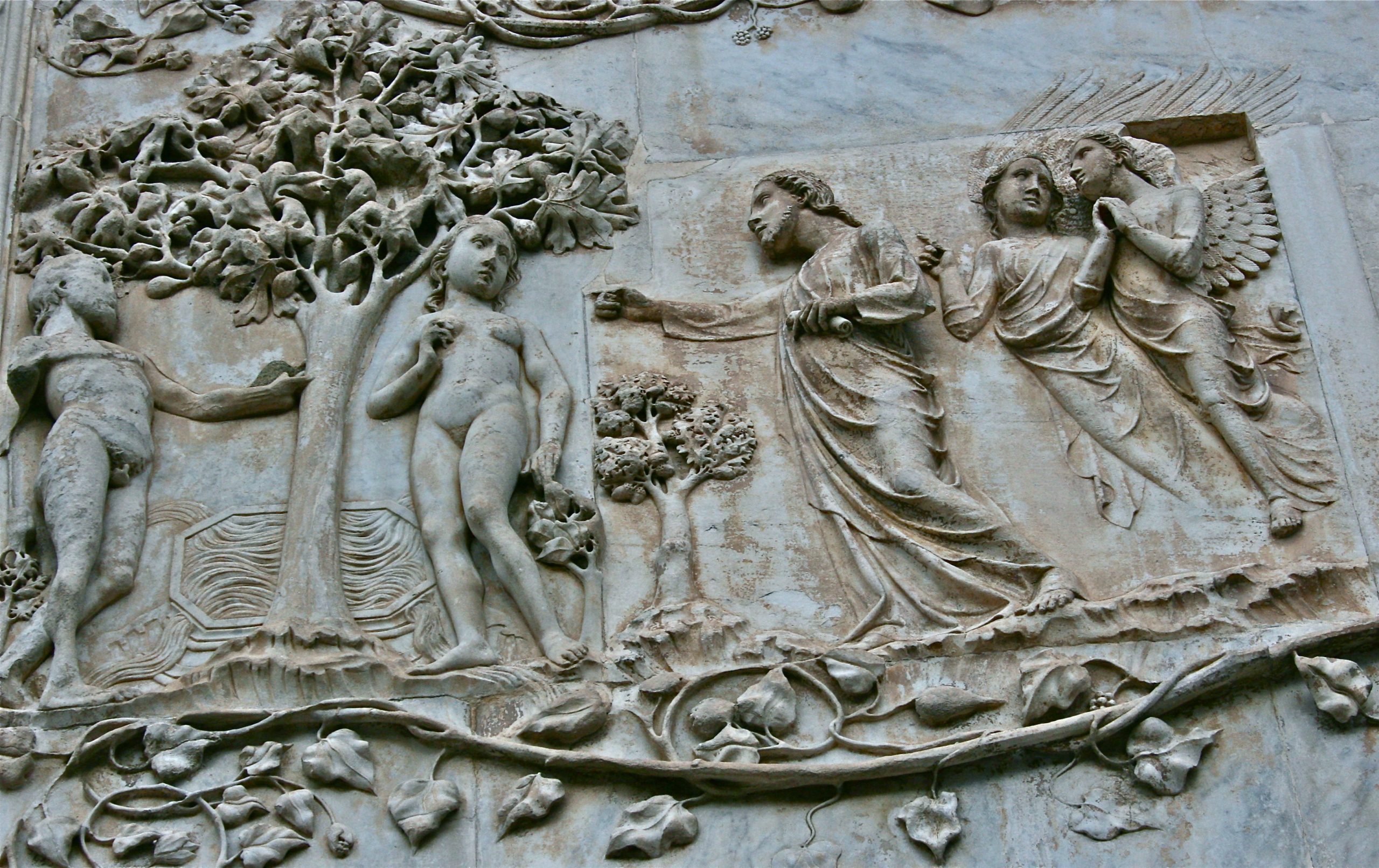
We find in this sense the archetype of the Tree of Life in many ancient cultures.  Some examples of references: images within meditation, the biblical Tree of Life that is planted in the middle of the Garden of Eden, and the Cross of Christ which medieval legends held to be made from the wood of the Tree of Life.

So, I believe that this universal and archetypical symbol represents our own perennial cycle of “life / death / life”, the natural cycle that belongs to the material sphere of our reality, but that it also represents transcending that reality, and ought not to be sought outside of ourselves. It seems useless to look for the “Tree of Life” outside this plane of reality.  To search for it outside of ourselves strikes me as an unsuccessful search.
I feel that the answer to the mystery of Eternal Life is not external to our being, rather it is ever-present and exists within each of us.  The Tree of Life lies within us, and is part of our deepest self, hidden at the bottom of an abyss we can achieve only if we “descend” consciously towards our origins, to the depths of our roots …

I think that the story of the descent into Apsu by Gilgamesh parallels the episode of the “descent into hell” by Christ, as reported by Matthew in the New Testament: “For as Jonah was three days and three nights in the belly of a huge fish, so the Son of Man will be three days and three nights in the heart of the earth ” (Matthew 12:40).
Another interesting comparison can be found in the book of Ephesians where Saint Paul, referring to the three days between death and resurrection of Jesus, says: “What does he ascended mean, except that he also descended to the lower, earthly regions?” (Ephesians 4:9).
Similar “Descents into hell” are also referenced in traditions much older than Christianity. There are many ancient myths concerning Afterlife travels and Descents to the Underworld, made by heroes and Gods.


The connection with certain rituals of the death and rebirth of nature is evident, as envisioned by the initiates of the ancient traditions such as Mithraism and Eleusinian mysteries

Hades abducted Persephone in the Underworld and her mother Demeter wandered all over the earth looking for her daughter, forbidding the trees to bear fruit… A journey to the Afterlife was made also by Orpheus who tried in vain to bring his wife Eurydice back from the dead…
Theseus, Hercules and Dionysus also went down into the Underworld to find their own divine identity… Then, there is also Ulysses, who descends into the Underworld to learn from Tiresias if he will ever succeed in ending his trip and if he will ever return to Ithaca (Odyssey XI, 90-137).
Enea also descends among the dead, accompanied by the Sibyl, to find his father Anchises (Aeneid VI, 237-31).

All of these examples are metaphors for inner journeys, in my opinion.   They are myths that help us to understand the importance of our capability as human beings to “descend” within ourselves on a trip to the depths of our roots, where we can find the symbolic Tree of Life and return victorious free of any ballast (Pukku and Mekku), just like the hero Gilgamesh,  awakened and aware of our own destiny and divine nature.

by Antonella Bazzoli – translation by Lynn De La Torre – April 25  2016   –
ShareTweet

Antonella Bazzoli

Next Post
Da Gesù a Francesco: “Pace a questa casa”

Da Gesù a Francesco: "Pace a questa casa"

ARTICOLI RECENTI

Da Gesù a Francesco: “Pace a questa casa”

Da Gesù a Francesco: “Pace a questa casa”

27/02/2026
Le seconde nozze di Federico II

Le seconde nozze di Federico II

27/02/2026
Babbo Natale, San Nicola e il solstizio invernale

Babbo Natale, San Nicola e il solstizio invernale

27/02/2026

Il fiore della vita, simbolo universale di geometria sacra

19/02/2026

Evus: “Eventi di Valorizzazione dell’Umbria Storica”. L’aspirazione del portale è contribuire senza scopo di lucro alla promozione, valorizzazione e tutela del territorio e del patrimonio culturale italiano, non solo attraverso articoli, conferenze e visite guidate, ma anche con la progettazione di eventi e convegni.

Categorie

  • Antiquae gentes
  • Apocalypsis
  • Archeologia
  • Calendario e Tradizione
  • Conferenze e Convegni
  • Culti e devozione
  • Donne e dee
  • Eventi
  • Homo faber
  • International edition
  • Itinerari
  • Itinerari guidati
  • L'Arte e le Arti
  • Medioevo
  • Mitologia
  • Notizie inedite
  • Racconti e poesie
  • Simboli e Icone
  • Sovrani, santi ed eroi
  • Storia antica
  • Ultime scoperte
  • Vision and mission

ARTICOLI RECENTI

Da Gesù a Francesco: “Pace a questa casa”

Da Gesù a Francesco: “Pace a questa casa”

27/02/2026
Le seconde nozze di Federico II

Le seconde nozze di Federico II

27/02/2026
Babbo Natale, San Nicola e il solstizio invernale

Babbo Natale, San Nicola e il solstizio invernale

27/02/2026

Il fiore della vita, simbolo universale di geometria sacra

19/02/2026

Welcome Back!

Login to your account below

Forgotten Password?

Retrieve your password

Please enter your username or email address to reset your password.

Log In
No Result
View All Result
  • Home
  • Notizie inedite
  • Ultime scoperte
  • Rivelazioni
  • Eventi
  • Info e contatti
    • About me
    • contacts
    • copyright
    • credits
    • link utili
  • International edition

© 2025 JNews - Premium WordPress news & magazine theme by Jegtheme.