giovedì, Aprile 2, 2026
No Result
View All Result
  • Login
evus.it
  • Home
  • Notizie inedite
    • All
    • Itinerari
    L’Abbazia di San Vincenzo al Furlo

    L’Abbazia di San Vincenzo al Furlo

    Il Castello di Guelfone, porta del Monte Cucco

    La sirena a due code della necropoli di Sovana

    La sirena a due code della necropoli di Sovana

    La squadra, il martello e lo scalpello

    Graffitomania nella chiesa di San Claudio

    L’affascinante complesso della Trinità a Venosa

    L’affascinante complesso della Trinità a Venosa

    Laterano, il paese scomparso dell’isola d’Elba

    Laterano, il paese scomparso dell’isola d’Elba

  • Ultime scoperte
    Da Gesù a Francesco: “Pace a questa casa”

    Da Gesù a Francesco: “Pace a questa casa”

    L’origine greca del toponimo “Ghea”

    Quando Perugia guardava ad Oriente

    Quando Perugia guardava ad Oriente

    La salvezza nel tempio dell’Angelo

    Le misteriose iscrizioni del Tempio Sant’Angelo

    TOUR IN ASSISI

    Un disegno di pace da Francesco a Federico II

    Sulle tracce di Bevignate

    Sulle tracce di Bevignate

  • Rivelazioni
    • All
    • Antiquae gentes
    • Apocalypsis
    • Homo faber
    Il mistero del capitello di Spoleto

    Il mistero del capitello di Spoleto

    L’arcangelo dai mille volti

    L’arcangelo dai mille volti

    Lucia… e il giorno più corto che ci sia

    L’amore scritto sul muro

    La squadra, il martello e lo scalpello

    Il mistero del capitello di Spoleto

    Il regno di Dio: Luca e Tommaso a confronto

    L’arcangelo dai mille volti

    Da Ercole a San Michele, un culto legato alla transumanza

  • Eventi
    • All
    • Conferenze e Convegni
    • Itinerari guidati
    Una scultura di Federico II ad Assisi?

    Una scultura di Federico II ad Assisi?

    Un disegno di pace da Francesco a Federico II

    L’incontro di san Francesco e il Sultano. Anno Domini 1219

    Convegno su Frate Elia il 28 e il 29 giugno a Cortona

    Convegno su Frate Elia il 28 e il 29 giugno a Cortona

    L’incontro di san Francesco e il Sultano. Anno Domini 1219

    Francesco e Federico II alla corte del Sultano. Conferenza a Perugia.

    A Fabriano il Natale in simboli

    Aspettando i Re Magi…

    Successo per il convegno su Francesco, Federico II e frate Elia

    Successo per il convegno su Francesco, Federico II e frate Elia

  • Info e contatti
    • About me
    • contacts
    • copyright
    • credits
    • link utili
  • International edition

    For those who want to get off the beaten path…

    Il culto delle sante galattofore

    February, women and therapeutic waters

    The flower of life

    Medieval parchments

    Medieval parchments

    Il mistero del capitello di Spoleto

    A mystery in the crypt

    Butchers, surgeons and charlatans

    Butchers, surgeons and charlatans

evus.it
  • Home
  • Notizie inedite
    • All
    • Itinerari
    L’Abbazia di San Vincenzo al Furlo

    L’Abbazia di San Vincenzo al Furlo

    Il Castello di Guelfone, porta del Monte Cucco

    La sirena a due code della necropoli di Sovana

    La sirena a due code della necropoli di Sovana

    La squadra, il martello e lo scalpello

    Graffitomania nella chiesa di San Claudio

    L’affascinante complesso della Trinità a Venosa

    L’affascinante complesso della Trinità a Venosa

    Laterano, il paese scomparso dell’isola d’Elba

    Laterano, il paese scomparso dell’isola d’Elba

  • Ultime scoperte
    Da Gesù a Francesco: “Pace a questa casa”

    Da Gesù a Francesco: “Pace a questa casa”

    L’origine greca del toponimo “Ghea”

    Quando Perugia guardava ad Oriente

    Quando Perugia guardava ad Oriente

    La salvezza nel tempio dell’Angelo

    Le misteriose iscrizioni del Tempio Sant’Angelo

    TOUR IN ASSISI

    Un disegno di pace da Francesco a Federico II

    Sulle tracce di Bevignate

    Sulle tracce di Bevignate

  • Rivelazioni
    • All
    • Antiquae gentes
    • Apocalypsis
    • Homo faber
    Il mistero del capitello di Spoleto

    Il mistero del capitello di Spoleto

    L’arcangelo dai mille volti

    L’arcangelo dai mille volti

    Lucia… e il giorno più corto che ci sia

    L’amore scritto sul muro

    La squadra, il martello e lo scalpello

    Il mistero del capitello di Spoleto

    Il regno di Dio: Luca e Tommaso a confronto

    L’arcangelo dai mille volti

    Da Ercole a San Michele, un culto legato alla transumanza

  • Eventi
    • All
    • Conferenze e Convegni
    • Itinerari guidati
    Una scultura di Federico II ad Assisi?

    Una scultura di Federico II ad Assisi?

    Un disegno di pace da Francesco a Federico II

    L’incontro di san Francesco e il Sultano. Anno Domini 1219

    Convegno su Frate Elia il 28 e il 29 giugno a Cortona

    Convegno su Frate Elia il 28 e il 29 giugno a Cortona

    L’incontro di san Francesco e il Sultano. Anno Domini 1219

    Francesco e Federico II alla corte del Sultano. Conferenza a Perugia.

    A Fabriano il Natale in simboli

    Aspettando i Re Magi…

    Successo per il convegno su Francesco, Federico II e frate Elia

    Successo per il convegno su Francesco, Federico II e frate Elia

  • Info e contatti
    • About me
    • contacts
    • copyright
    • credits
    • link utili
  • International edition

    For those who want to get off the beaten path…

    Il culto delle sante galattofore

    February, women and therapeutic waters

    The flower of life

    Medieval parchments

    Medieval parchments

    Il mistero del capitello di Spoleto

    A mystery in the crypt

    Butchers, surgeons and charlatans

    Butchers, surgeons and charlatans

No Result
View All Result
Plugin Install : Cart Icon need WooCommerce plugin to be installed.
evus.it
No Result
View All Result
Home International edition

The holy days of Saturn

by Antonella Bazzoli
14/05/2021
in International edition

It seems that our custom to exchange gifts during Christmas comes from some ancient traditions practiced at the Saturnalia, one of the most popular holidays in the Roman calendar.
The Saturnalia festival, that in later centuries would change into the Brumalia festival (from bruma, winter solstice), represented an occasion for visiting friends and presenting gifts, particularly wax candles and small earthenware figurines, named sigillaria (Macrobius, Saturnali I, I, 10.24).
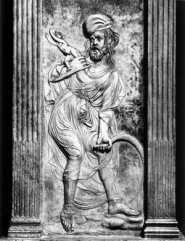
The Saturnalia consisted of banquets, dances, orgies and excesses of all kinds. Even gambling, banned in the rest of the year, was tolerated during the celebration. Pliny the Younger withdrew to a secluded house to study in peace during the festival’s days (Epistles, II, 17, 24).
Originally the celebrations took place on only one day: the fourteenth day before the Kalends of January (December 19), but during the imperial age they lasted seven days, from December 17 to 23.  In these days all the rules were inverted, so that even the slaves were treated as equals: they could wear clothing of their masters and could eat at their tables in remembrance of the legendary “golden age”, when people lived peacefully, without discrimination between freemen and slaves.

We know that the term Saturnalia derives from Saturn, the italic god identified with the greek Kronos. During the Saturnalia, inside the God’s temple in Rome (situated in the Roman Forum) the feet of his ivory cult statue were symbolically freed from the woollen bonds that tied them up for the rest of the year, to represent the liberation of the god Saturn and the return to the mythical ancient  “Golden Age”.

As Seneca mentions (Apocol. 8.2), on the first day of Saturnalia was elected a symbolic figure that would reign in the chaos of the festival. Also known by the name of rex saturnaliorum, this symbolic king may have represented the same god Saturn.
Upon conclusion of the festivities, the fate of the rex saturnaliorum was to be put to death, through a symbolic killing.
Some features of this ancient ritual perhaps still survive today in some regions of Italy, where it is still alive the tradition of setting fire to a puppet during the New Year’s Eve. In some places the tradition survives to represent a character burlesque dancing among the crackling of firecrackers in the village square.

This leads us to ask why the Roman Saturnalia were held at the end of December rather then the end of February – shortly before the arrival of spring – when the Romans used to celebrate the New Year. The fact is that the ancient calendar of Romolo was composed of only ten months, as evidenced by the name of the last month: December.
In this calendar January and February were a period of transition, waiting for the new year and the renewal of the cosmos.
After the reform of Numa, who introduced the two missing months in his new calendar, the period of transition and renewal (focused on the days before the winter solstice, from 21st to 24th of December) represents an “apparent death” of the sun, preceding his rising again, higher in the sky, in the following days.ù
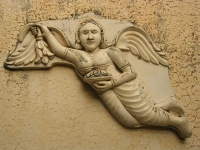
 

Interesting is to discover that there are some similar characteristics between the god Saturn and the Vedic figure of  Satyavrata. The Hindu tradition says that Lord Vishnu appeared to the king Satyavrata, in the form of a giant fish, to announce to him a cosmic deluge.
The Lord ordered Satyavrata to build a boat to save seeds, plants and animals required for creating the next world. In the Hindu myth the figure of Satyavrata is similar to Noah.
According to René Guénon Satyavrata may represent – like the god Saturn – the manifestation of a deity who creates and recreates the cosmos continuously.
Vishnu appeared to Satyavrata in a transitional period at the end of the cosmic cycle preceding the present one, while Saturn’s role of renewer of the cosmos is confirmed by the Saturnalia, celebrated as a week of transition and renewal, in which everything is allowed.
No less interesting is to note that the root “sat” (which in Sanskrit means: the One) is common to both deities.

Antonella Bazzoli – December 2008, updated  December 2013
Tags: Christmas, December, Saturno, winter solstice

ShareTweet

Antonella Bazzoli

Next Post
Da Gesù a Francesco: “Pace a questa casa”

Da Gesù a Francesco: "Pace a questa casa"

ARTICOLI RECENTI

Da Gesù a Francesco: “Pace a questa casa”

Da Gesù a Francesco: “Pace a questa casa”

27/02/2026
Le seconde nozze di Federico II

Le seconde nozze di Federico II

27/02/2026
Babbo Natale, San Nicola e il solstizio invernale

Babbo Natale, San Nicola e il solstizio invernale

27/02/2026

Il fiore della vita, simbolo universale di geometria sacra

19/02/2026

Evus: “Eventi di Valorizzazione dell’Umbria Storica”. L’aspirazione del portale è contribuire senza scopo di lucro alla promozione, valorizzazione e tutela del territorio e del patrimonio culturale italiano, non solo attraverso articoli, conferenze e visite guidate, ma anche con la progettazione di eventi e convegni.

Categorie

  • Antiquae gentes
  • Apocalypsis
  • Archeologia
  • Calendario e Tradizione
  • Conferenze e Convegni
  • Culti e devozione
  • Donne e dee
  • Eventi
  • Homo faber
  • International edition
  • Itinerari
  • Itinerari guidati
  • L'Arte e le Arti
  • Medioevo
  • Mitologia
  • Notizie inedite
  • Racconti e poesie
  • Simboli e Icone
  • Sovrani, santi ed eroi
  • Storia antica
  • Ultime scoperte
  • Vision and mission

ARTICOLI RECENTI

Da Gesù a Francesco: “Pace a questa casa”

Da Gesù a Francesco: “Pace a questa casa”

27/02/2026
Le seconde nozze di Federico II

Le seconde nozze di Federico II

27/02/2026
Babbo Natale, San Nicola e il solstizio invernale

Babbo Natale, San Nicola e il solstizio invernale

27/02/2026

Il fiore della vita, simbolo universale di geometria sacra

19/02/2026

Welcome Back!

Login to your account below

Forgotten Password?

Retrieve your password

Please enter your username or email address to reset your password.

Log In
No Result
View All Result
  • Home
  • Notizie inedite
  • Ultime scoperte
  • Rivelazioni
  • Eventi
  • Info e contatti
    • About me
    • contacts
    • copyright
    • credits
    • link utili
  • International edition

© 2025 JNews - Premium WordPress news & magazine theme by Jegtheme.