giovedì, Aprile 2, 2026
No Result
View All Result
  • Login
evus.it
  • Home
  • Notizie inedite
    • All
    • Itinerari
    L’Abbazia di San Vincenzo al Furlo

    L’Abbazia di San Vincenzo al Furlo

    Il Castello di Guelfone, porta del Monte Cucco

    La sirena a due code della necropoli di Sovana

    La sirena a due code della necropoli di Sovana

    La squadra, il martello e lo scalpello

    Graffitomania nella chiesa di San Claudio

    L’affascinante complesso della Trinità a Venosa

    L’affascinante complesso della Trinità a Venosa

    Laterano, il paese scomparso dell’isola d’Elba

    Laterano, il paese scomparso dell’isola d’Elba

  • Ultime scoperte
    Da Gesù a Francesco: “Pace a questa casa”

    Da Gesù a Francesco: “Pace a questa casa”

    L’origine greca del toponimo “Ghea”

    Quando Perugia guardava ad Oriente

    Quando Perugia guardava ad Oriente

    La salvezza nel tempio dell’Angelo

    Le misteriose iscrizioni del Tempio Sant’Angelo

    TOUR IN ASSISI

    Un disegno di pace da Francesco a Federico II

    Sulle tracce di Bevignate

    Sulle tracce di Bevignate

  • Rivelazioni
    • All
    • Antiquae gentes
    • Apocalypsis
    • Homo faber
    Il mistero del capitello di Spoleto

    Il mistero del capitello di Spoleto

    L’arcangelo dai mille volti

    L’arcangelo dai mille volti

    Lucia… e il giorno più corto che ci sia

    L’amore scritto sul muro

    La squadra, il martello e lo scalpello

    Il mistero del capitello di Spoleto

    Il regno di Dio: Luca e Tommaso a confronto

    L’arcangelo dai mille volti

    Da Ercole a San Michele, un culto legato alla transumanza

  • Eventi
    • All
    • Conferenze e Convegni
    • Itinerari guidati
    Una scultura di Federico II ad Assisi?

    Una scultura di Federico II ad Assisi?

    Un disegno di pace da Francesco a Federico II

    L’incontro di san Francesco e il Sultano. Anno Domini 1219

    Convegno su Frate Elia il 28 e il 29 giugno a Cortona

    Convegno su Frate Elia il 28 e il 29 giugno a Cortona

    L’incontro di san Francesco e il Sultano. Anno Domini 1219

    Francesco e Federico II alla corte del Sultano. Conferenza a Perugia.

    A Fabriano il Natale in simboli

    Aspettando i Re Magi…

    Successo per il convegno su Francesco, Federico II e frate Elia

    Successo per il convegno su Francesco, Federico II e frate Elia

  • Info e contatti
    • About me
    • contacts
    • copyright
    • credits
    • link utili
  • International edition

    For those who want to get off the beaten path…

    Il culto delle sante galattofore

    February, women and therapeutic waters

    The flower of life

    Medieval parchments

    Medieval parchments

    Il mistero del capitello di Spoleto

    A mystery in the crypt

    Butchers, surgeons and charlatans

    Butchers, surgeons and charlatans

evus.it
  • Home
  • Notizie inedite
    • All
    • Itinerari
    L’Abbazia di San Vincenzo al Furlo

    L’Abbazia di San Vincenzo al Furlo

    Il Castello di Guelfone, porta del Monte Cucco

    La sirena a due code della necropoli di Sovana

    La sirena a due code della necropoli di Sovana

    La squadra, il martello e lo scalpello

    Graffitomania nella chiesa di San Claudio

    L’affascinante complesso della Trinità a Venosa

    L’affascinante complesso della Trinità a Venosa

    Laterano, il paese scomparso dell’isola d’Elba

    Laterano, il paese scomparso dell’isola d’Elba

  • Ultime scoperte
    Da Gesù a Francesco: “Pace a questa casa”

    Da Gesù a Francesco: “Pace a questa casa”

    L’origine greca del toponimo “Ghea”

    Quando Perugia guardava ad Oriente

    Quando Perugia guardava ad Oriente

    La salvezza nel tempio dell’Angelo

    Le misteriose iscrizioni del Tempio Sant’Angelo

    TOUR IN ASSISI

    Un disegno di pace da Francesco a Federico II

    Sulle tracce di Bevignate

    Sulle tracce di Bevignate

  • Rivelazioni
    • All
    • Antiquae gentes
    • Apocalypsis
    • Homo faber
    Il mistero del capitello di Spoleto

    Il mistero del capitello di Spoleto

    L’arcangelo dai mille volti

    L’arcangelo dai mille volti

    Lucia… e il giorno più corto che ci sia

    L’amore scritto sul muro

    La squadra, il martello e lo scalpello

    Il mistero del capitello di Spoleto

    Il regno di Dio: Luca e Tommaso a confronto

    L’arcangelo dai mille volti

    Da Ercole a San Michele, un culto legato alla transumanza

  • Eventi
    • All
    • Conferenze e Convegni
    • Itinerari guidati
    Una scultura di Federico II ad Assisi?

    Una scultura di Federico II ad Assisi?

    Un disegno di pace da Francesco a Federico II

    L’incontro di san Francesco e il Sultano. Anno Domini 1219

    Convegno su Frate Elia il 28 e il 29 giugno a Cortona

    Convegno su Frate Elia il 28 e il 29 giugno a Cortona

    L’incontro di san Francesco e il Sultano. Anno Domini 1219

    Francesco e Federico II alla corte del Sultano. Conferenza a Perugia.

    A Fabriano il Natale in simboli

    Aspettando i Re Magi…

    Successo per il convegno su Francesco, Federico II e frate Elia

    Successo per il convegno su Francesco, Federico II e frate Elia

  • Info e contatti
    • About me
    • contacts
    • copyright
    • credits
    • link utili
  • International edition

    For those who want to get off the beaten path…

    Il culto delle sante galattofore

    February, women and therapeutic waters

    The flower of life

    Medieval parchments

    Medieval parchments

    Il mistero del capitello di Spoleto

    A mystery in the crypt

    Butchers, surgeons and charlatans

    Butchers, surgeons and charlatans

No Result
View All Result
Plugin Install : Cart Icon need WooCommerce plugin to be installed.
evus.it
No Result
View All Result
Home International edition

The flower of life

by Antonella Bazzoli
15/07/2021
in International edition

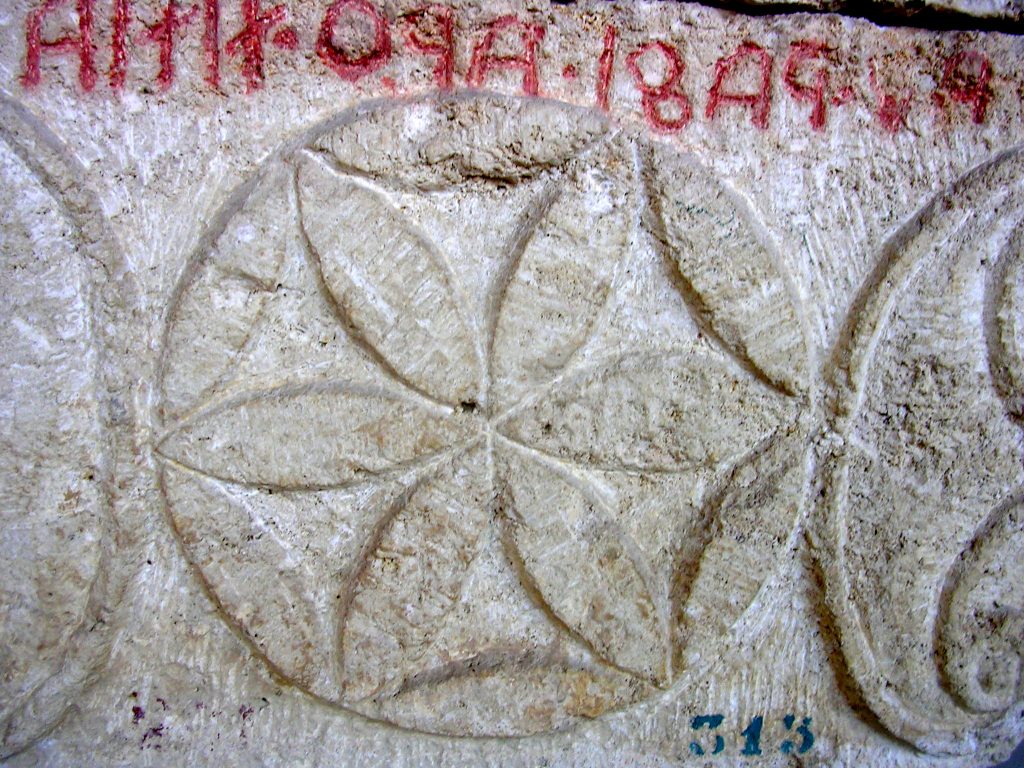
The flower of life is an ancient symbol that was considered sacred by many cultures worldwide from Europe to Egypt and from the Middle East to China.
The basic form resembles a flower with six petals placed in a circle, hence its name: flower of life.
Whether due to its geometry that is found in many forms in nature, or due to the universal solar or cosmological meaning that the symbol represents, the flower of life has been known in a variety of contexts.
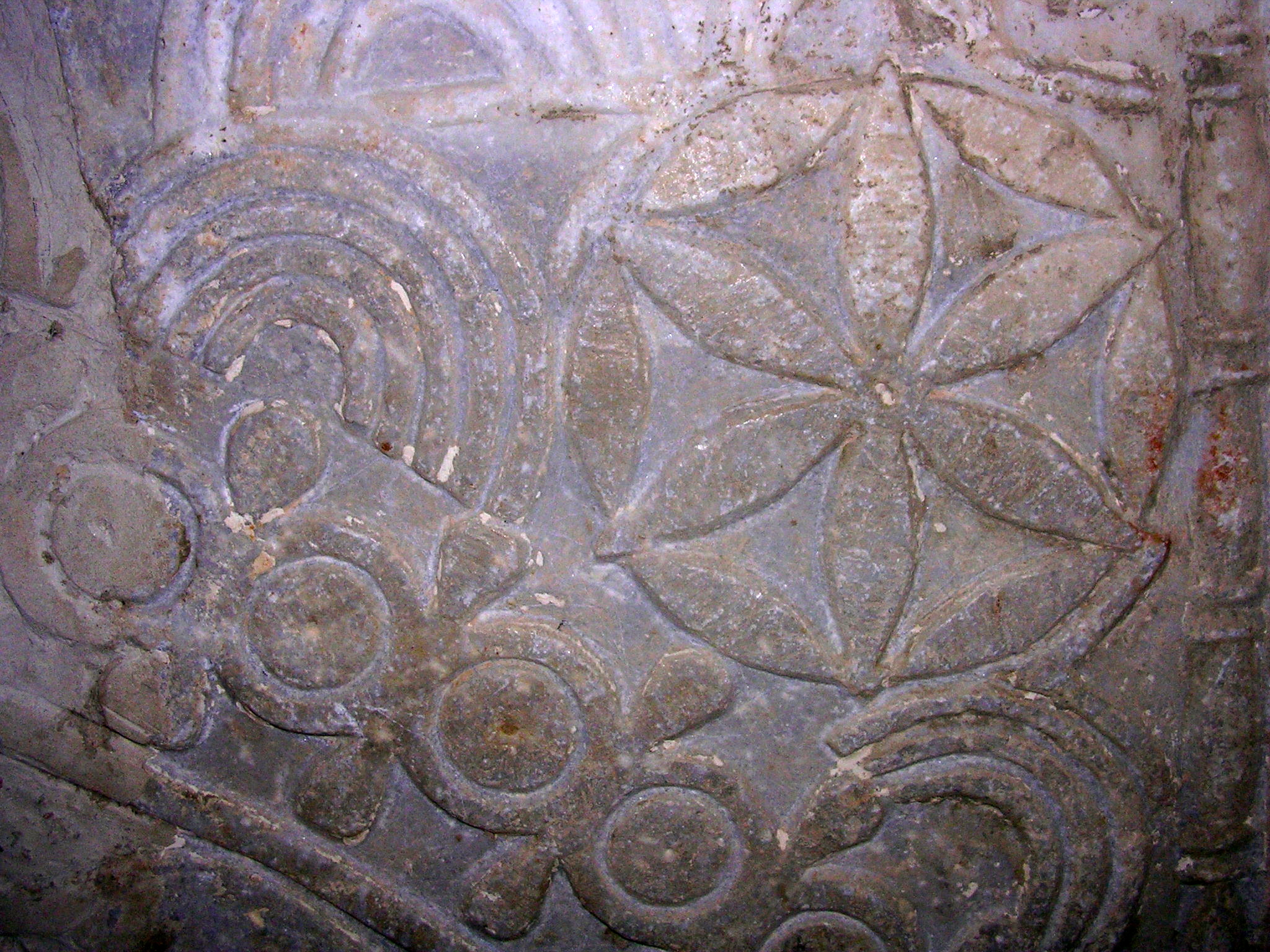

Its perfect form, proportion and harmony have been known to philosophers and architects of the past and the symbol has been used for magic, religious, and thaumaturgic purposes by many ancient peoples who lived in locations and eras that are very distant from each other.

To this religious symbol the Etruscans probably assigned the values of victory and rebirth after death.

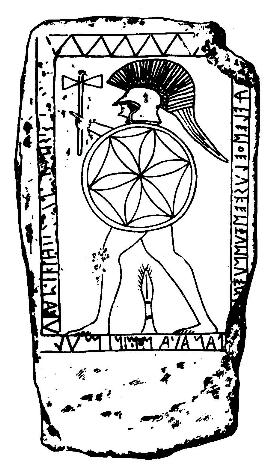
The oldest and most famous Etruscan finding in which we find the flower of life is a funerary stele (stone slab decorated with figures or inscriptions), found in Vetulonia,  which dates back from the second half of the seventh century BC.
In the stele of Vetulonia we see a portrait of a warrior-prince, armed like a hoplite (Greek infantryman), wearing a plumed helmet in Corinthian style equipped with a cheekpiece and wide-tailed crest.
The warrior wields an ax in his right hand, while in his left hand he holds a huge round shield, upon which the symbol with six petals is engraved.
Along the frame of the stone slab is one of the oldest Etruscan inscriptions that we know of.  The name of the warrior Aule Feluske is engraved along with another name: Hirumina Phersnachs (which has been translated as “Hirumina from Perugia”) who erected the stele in memory of his ally. It has been hypothesized that during that period of time the Etruscan cities of Vetulonia and Perugia had formed a political and military alliance.


The same symbol of the flower with six petals appears on another Etruscan “stele” dating back to the VII – VI century BC.  It’s called “stele di Montegualandro”, it was uncovered in the territory of Lake Trasimeno and today it’s in the archaeological museum of Perugia. What is striking about this “stele” is the presence of a flower of life, identical to that of the “stele of Vetulonia”, on one of the two circular shields held in hand by the warriors. It is important to understand the religious symbolic significance of these shields, since as fundamental defensive weapons they were considered to be victory symbols and sacred talismans.
Other flowers of life, with an apparent symbolic meaning of victory and rebirth after death, are often found at funerary sites, such as those engraved on many Etruscan and Roman urns.
The symbol was also well-known by the ancient Celts, who used it for magical and thaumaturgic purposes.
The universal symbolism of the flower of life continued to be transmitted and used throughout the Middle Ages, by master builders, wise architects and stone-cutters, as well as by monks and knights, especially by Templars.
The flower of life is in fact present in many churches belonged to the famous order of knights Templar, such as the medieval church of San Bevignate in Perugia, where the symbol was carved on the main portal.
It was also well-known to the ancient Greek mathematicians who used the the flower of life as a base form to build the platonic solids (regular, convex polyhedra).
As a perfect synthesis of sacred geometry, the symbol itself embodies the golden ratio allowing movement from the two-dimensional plane to the three-dimensional plane.
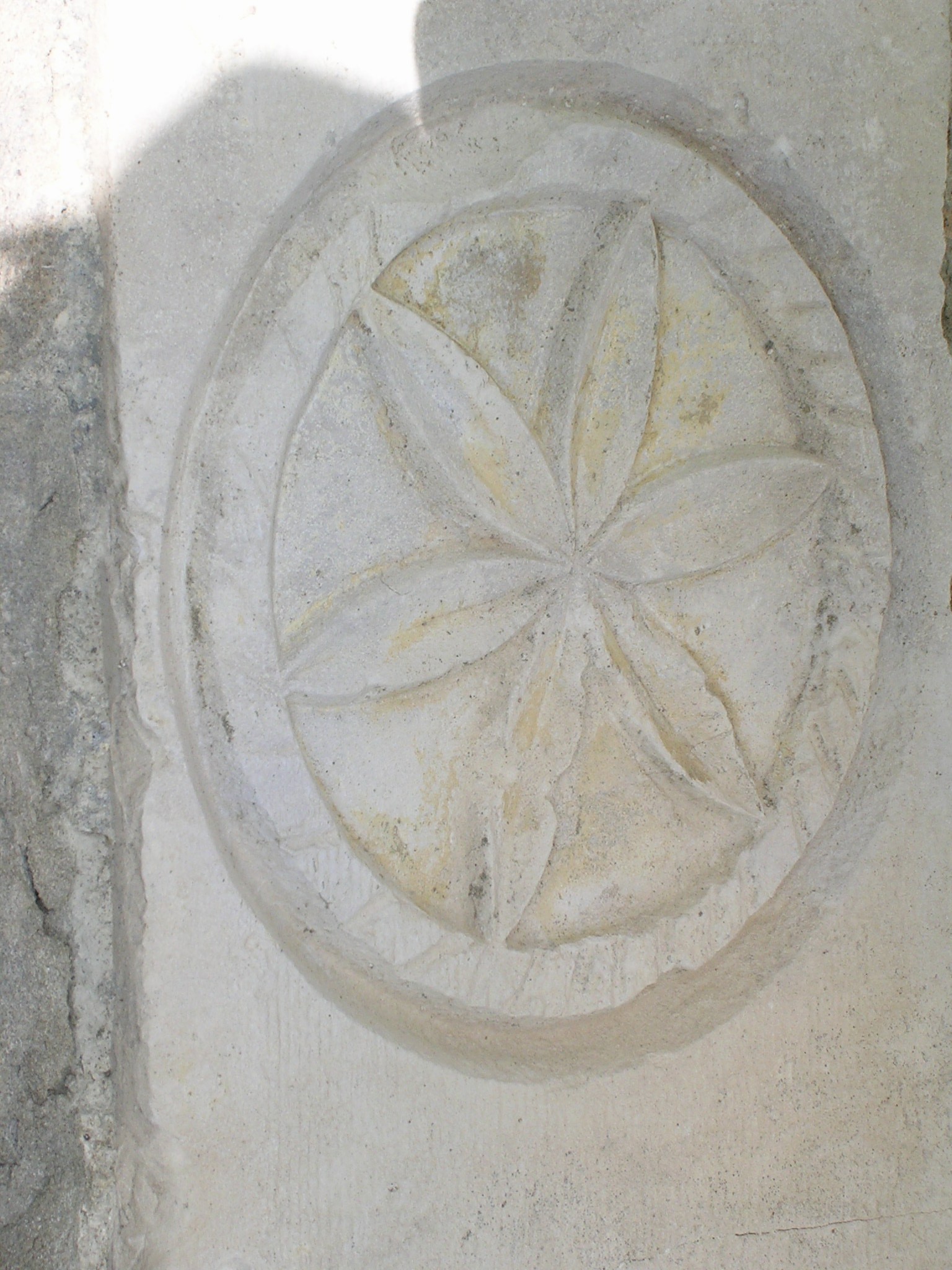

Its geometrical form, composed of multiple overlapping circles which transform the symbol into a more complex structure with hexagonal symmetry, has been found in Egypt etched several times on the granite pillars of the megalithic Osireion of Abydos, which is speculated to date back to antediluvian times and may possibly have been the legendary tomb of the god Osiris.
Even in China, inside the Forbidden City which was the Emperor’s residence, we find a flower of life carved between the paws of what resembles a solar lion: it is the so-called Cane Du, the guardian of knowledge.
Also noteworthy is the fact that in ancient China the ancient oracular text, known as the I Ching or  The Book of Changes, consists of 64 hexagrams composed of six stacked horizontal lines, where each line is either solid (Yang) or broken (Yin).
Six is the number of Creation in the Judeo-Christian culture too.  Called “Sixth Day of Genesis” this symbol derives from the rotation of the six spheres, each one corresponding to a day of creation. It represents the inner structure of creation, which defines the harmony and geometric perfection present in nature and within the cosmos.

Microcosm and macrocosm are both represented by this symbol through a complex and perfect system of geometries, proportions, and mathematical relationships that can explain the genesis and evolution of every form of life in the universe.
The language of “sacred geometry”, which belongs to the symbolism of the “flower of life”, would have allowed – to anyone who would have had the tools to understand it – the knowledge of the laws governing all of life and the movement of the entire cosmos.

Antonella Bazzoli – translated by Lynn De La Torre
Tags: Etruscans, iconography, Knights Templar, Templars, Umbria, Uncategorized

ShareTweet

Antonella Bazzoli

Next Post
Da Gesù a Francesco: “Pace a questa casa”

Da Gesù a Francesco: "Pace a questa casa"

ARTICOLI RECENTI

Da Gesù a Francesco: “Pace a questa casa”

Da Gesù a Francesco: “Pace a questa casa”

27/02/2026
Le seconde nozze di Federico II

Le seconde nozze di Federico II

27/02/2026
Babbo Natale, San Nicola e il solstizio invernale

Babbo Natale, San Nicola e il solstizio invernale

27/02/2026

Il fiore della vita, simbolo universale di geometria sacra

19/02/2026

Evus: “Eventi di Valorizzazione dell’Umbria Storica”. L’aspirazione del portale è contribuire senza scopo di lucro alla promozione, valorizzazione e tutela del territorio e del patrimonio culturale italiano, non solo attraverso articoli, conferenze e visite guidate, ma anche con la progettazione di eventi e convegni.

Categorie

  • Antiquae gentes
  • Apocalypsis
  • Archeologia
  • Calendario e Tradizione
  • Conferenze e Convegni
  • Culti e devozione
  • Donne e dee
  • Eventi
  • Homo faber
  • International edition
  • Itinerari
  • Itinerari guidati
  • L'Arte e le Arti
  • Medioevo
  • Mitologia
  • Notizie inedite
  • Racconti e poesie
  • Simboli e Icone
  • Sovrani, santi ed eroi
  • Storia antica
  • Ultime scoperte
  • Vision and mission

ARTICOLI RECENTI

Da Gesù a Francesco: “Pace a questa casa”

Da Gesù a Francesco: “Pace a questa casa”

27/02/2026
Le seconde nozze di Federico II

Le seconde nozze di Federico II

27/02/2026
Babbo Natale, San Nicola e il solstizio invernale

Babbo Natale, San Nicola e il solstizio invernale

27/02/2026

Il fiore della vita, simbolo universale di geometria sacra

19/02/2026

Welcome Back!

Login to your account below

Forgotten Password?

Retrieve your password

Please enter your username or email address to reset your password.

Log In
No Result
View All Result
  • Home
  • Notizie inedite
  • Ultime scoperte
  • Rivelazioni
  • Eventi
  • Info e contatti
    • About me
    • contacts
    • copyright
    • credits
    • link utili
  • International edition

© 2025 JNews - Premium WordPress news & magazine theme by Jegtheme.