My journey has brought from a castle far away to meet the man who I have sought so intently, the medical monk who resides in this abbey. He is my last hope. I have no other option than to try his potions in order to save my marriage.
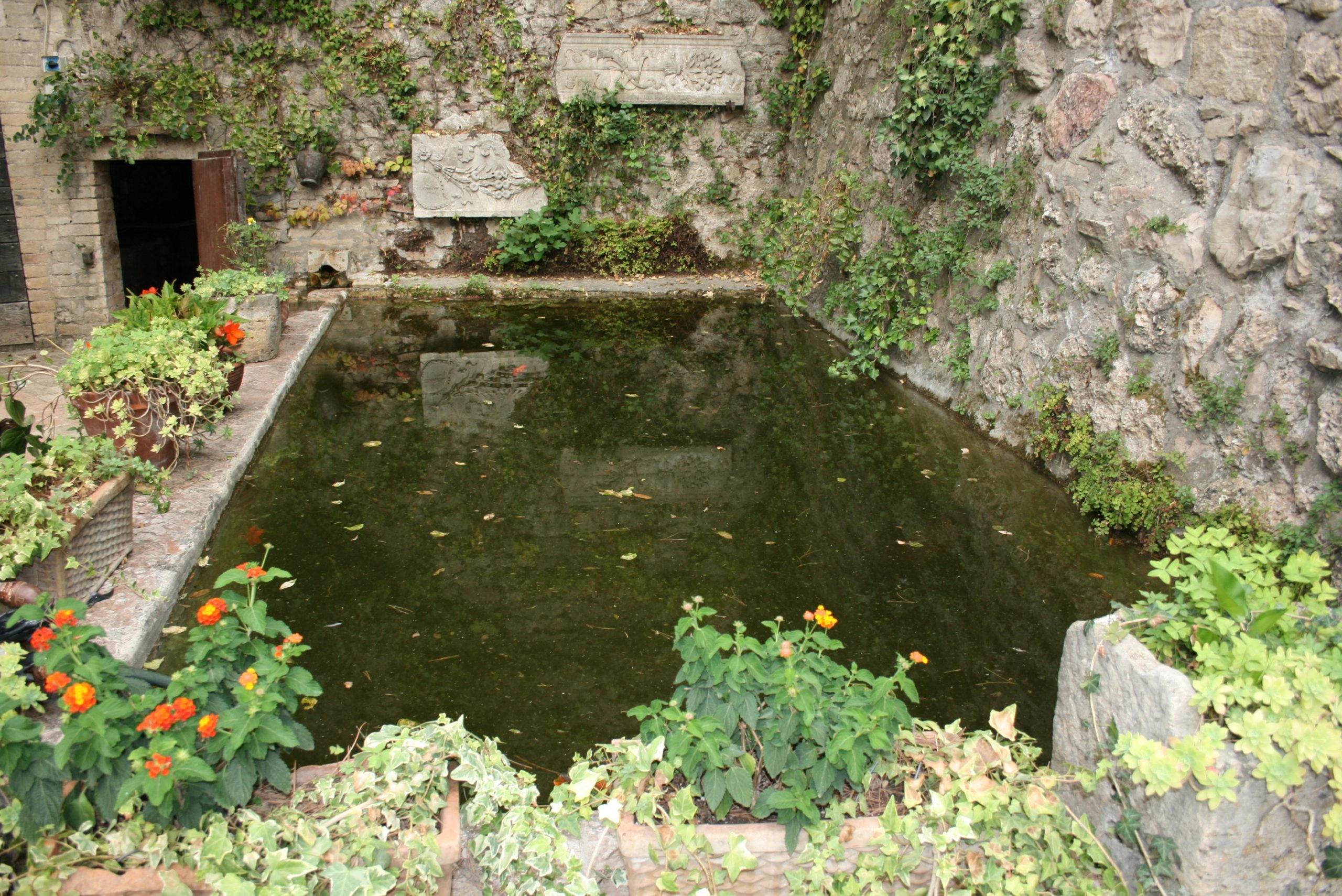
Perhaps his concoctions will be able to heal my husband and make him love me and desire me like he once did. I’ve heard that this monk knows the secrets to every herb, flower, tree and spice on the planet. I’ll meet him in the garden on the lower level of the grounds, near the old fishing pond and next to the vegetable garden of the monastery. I was told that it is there that he spends most of his time, choosing carefully the ingredients for his cures that grow in this garden of the “semplici.” They say that his “hortus sanitatis” is rich with the rarest of herbs, which he cultivates and rears with his own hands and then turns into the makings of medical miracles. While I cross the garden that leads me to the one below, I feel as if I’m entering into some sort of fantasy.
The atmosphere is practically unreal and I’m reminded of the garden of Alcinous that Homer describes in the Odyssey, and the gardens of Babylon constructed by king Nebuchadnezzar for his bride Amitu to make her feel more at home.
“Pairidaeza” the Persians called those mythic gardens, or “paradeisos” in Greek, “pardes” in Hebrew, and of course “paradise” to us. The same type of paradise that the monks are attempting to recreated in their monastery.
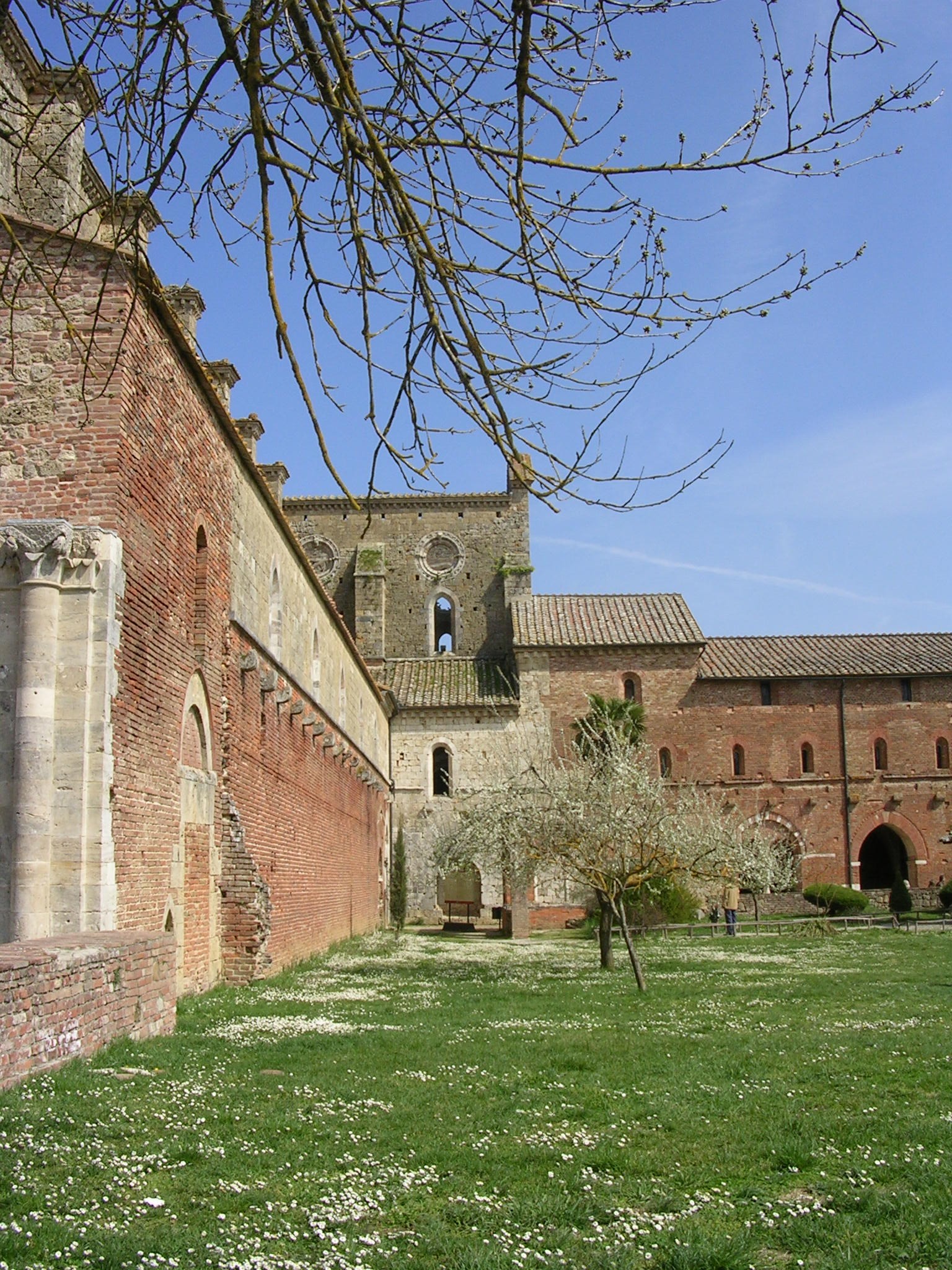
It really is as if I’m walking through the very same Eden in which the Almighty Lord placed man and woman whom he molded in his own image. Now I find myself at the center of the garden, where God created the tree of life. The monks chose this spot appropriately to plant a beautiful olive tree, a symbol in itself of love and immortality, whose little fruits fuel and feed, cure and illuminate, give peace and beauty.
It is not by chance that the dove announces to the biblical Noah the end of the flood by delivering him an olive branch in his mouth. Even further, the goddess Athena chose this sacred plant as her gift to mankind. I take only a few steps and see before me a grand fig tree burdened with its beautiful fruit.
It is the tree of Knowledge of Good and Evil, and it seems to almost indicate the path from the state of grace to that of guilt.
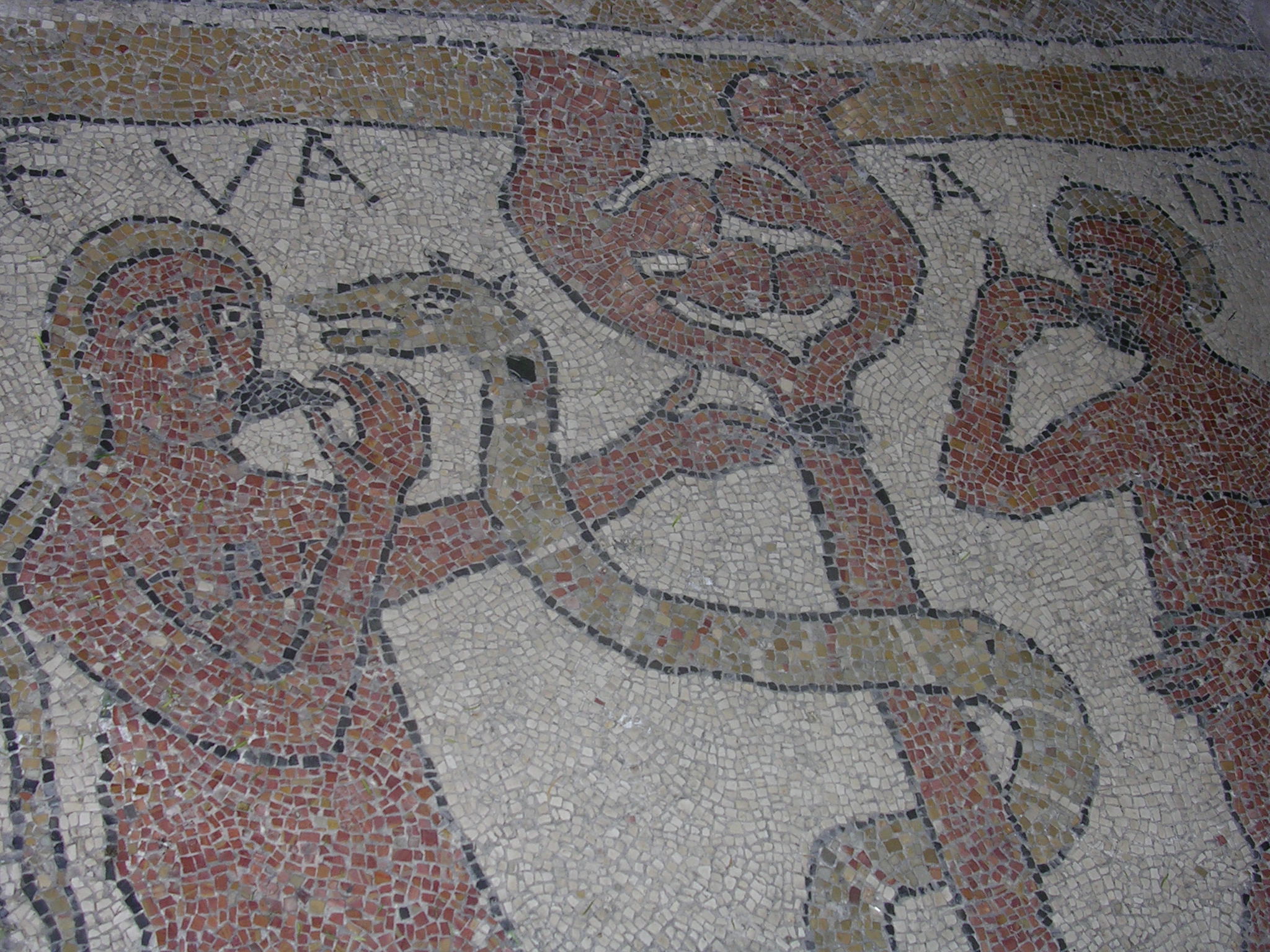
Adam and Eve took up the prohibited fruit and feeling shame for the first time discovered that they were nude and thus covered themselves with the leaves of the fig tree.
I recognize this particular kind of fig tree, a ficus ruminalis as the same kind one could use the branches of to make a basket, the same kind of basket in which Romulus and Remus, the mythical twins of Ancient Rome, were abandoned in. It was in this type of basket that they were discovered by the She-wolf, who then nursed the young twins of the god Mars and the Vestal Virgin Rea Silvia. I ask myself how come this tree is so sacred yet at the same time connected so strongly to original sin.
I once heard from a wise old woman that this variety of fig is only female and produces its fruit thanks to the pollination of a particular wasp. The plant in its male form produces only pollen and is called a caprificus.
Perhaps it is thanks to the milk-like substance that occasionally oozes from the succulent fruits that links this tree so strongly to many mysterious legends and worrisome rituals.
For instance, the Nonae Caprotinae was a festival on the Ancient Roman calendar held in July where a goat would be sacrificed to the goddess Juno under the male fig tree. Only women were permitted to participate in this ritual that unfolded in the shade of the caprificus, whether they were elderly and wedded or young and single, without distinction or rank they came together to honor Juno in this manner. However, the festival ends in very shocking manner, with unutterable acts of obscene and licentious behavior.
This too, however, is in commemoration of a courageous act performed by a slave named Tutola who, having been captured by the Gauls was able to disguise herself and others and was able to deceive their enemies with the weapon of seduction and thus saved from destruction.
I think of my husband and the scents of our garden—it’s very different from the present one in which I stand, where nature speaks in symbols. There, at the castle, the garden is a place of amusement, where one plays ball or chess.
I remember when I used to hide myself in the labyrinth and my husband would try to find me, then we would relax in the shade of the pomegranate tree and my love would address a few lines of verse from the Canticle of Canticles to me.
I cannot resist the temptation and I open the bible and begin to read the very verses:“….your lips ooze virgin honey, oh wife of mine, there’s honey and milk under your tongue and the perfume of your dress is like the scents of Lebanon” 1
I can almost hear the ardent voice of my husband, full of passion.
But instead it is another voice that brings me back to reality, that of a man who in these past few moments has undetectably advanced closer and closer to me.
I close the bible in a hurry while the monacus medicus welcomes me with the words of Bernard of Clairvaux, “little dear, remember that you will find more of what you are looking for in the woods than in books; trees and rocks will teach you that which a teacher could never tell you”.
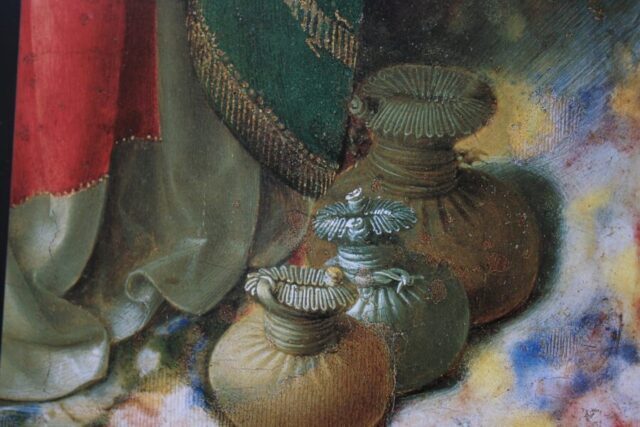
He is a monk of small stature, with a modest air about him and a benevolent face. He welcomes me as if he has known me forever and he invites me to follow him into the spice room. Along the spacious walls I see vials and vases of various forms and dimensions, placed carefully and precisely along the running wooden tables, being treated almost as if they were precious ancient manuscripts in the archives of a library.
What strikes me most, however, is the strong perfume that permeates the ambience—a mixture of heavy scents that give the result of a fragrance that on one hand seems to stun one’s senses and on the other shares a mixing of sweet and bitter, of a strong balsamic and a refreshing cleanliness.
The monk disappears into a cabinet for a moment and extracts a vial of glass: “Here it is the remedy that you have asked of me. A dose of love that was prepared following a precise recipe from a precious ancient document. It is made particularly for one who was loved, with a base of leaves from the herba belofilis….just as soon as your husband has drunk the potion, you will see that he loves you again”.
While I lower my gaze, embarrassed, the monk hands over the potion and with a stern tone of voice, practically threatening, tells me “However, I must warn you dear one, it is a mortal sin to use this and even to have the desire to use this, outside the bonds of a sacred marriage…and be careful, because one cannot tell the limits of this potion, since it may alight internally a great carnal appetite for lust that may be difficult to assuage”. 2
To these bizarre words I feel my face blush with shame, and making the sign of the cross I ask humbly, “Father, is this prohibited by the Church?” And he, to my great surprise responds, “These kinds of things have always been prohibited by the Church, and for this reason do not discuss this with anyone”. 3
I promise to keep this secret and ask the monk if I may leave an offering for the abbey, however he responds, citing the rule of Saint Benedict: “Infirmorum cura ante omnia et super omnia adhibenda est. I can’t accept money dear girl, the rule of my order does not allow it”.
Then he leads me to the door of the spice room and turning away from me says: “Now, I must return to my garden, but remember that if in the future you have need of a doctor and you are unsuccessful in your searching, it will be enough for you to observe these three simple rules in order to cure yourself: be of sane mind, rest, and keep a healthy diet”. After having thanked the monk, I leave the spice room and make my way to the exit, hiding the precious vial under my cloak.
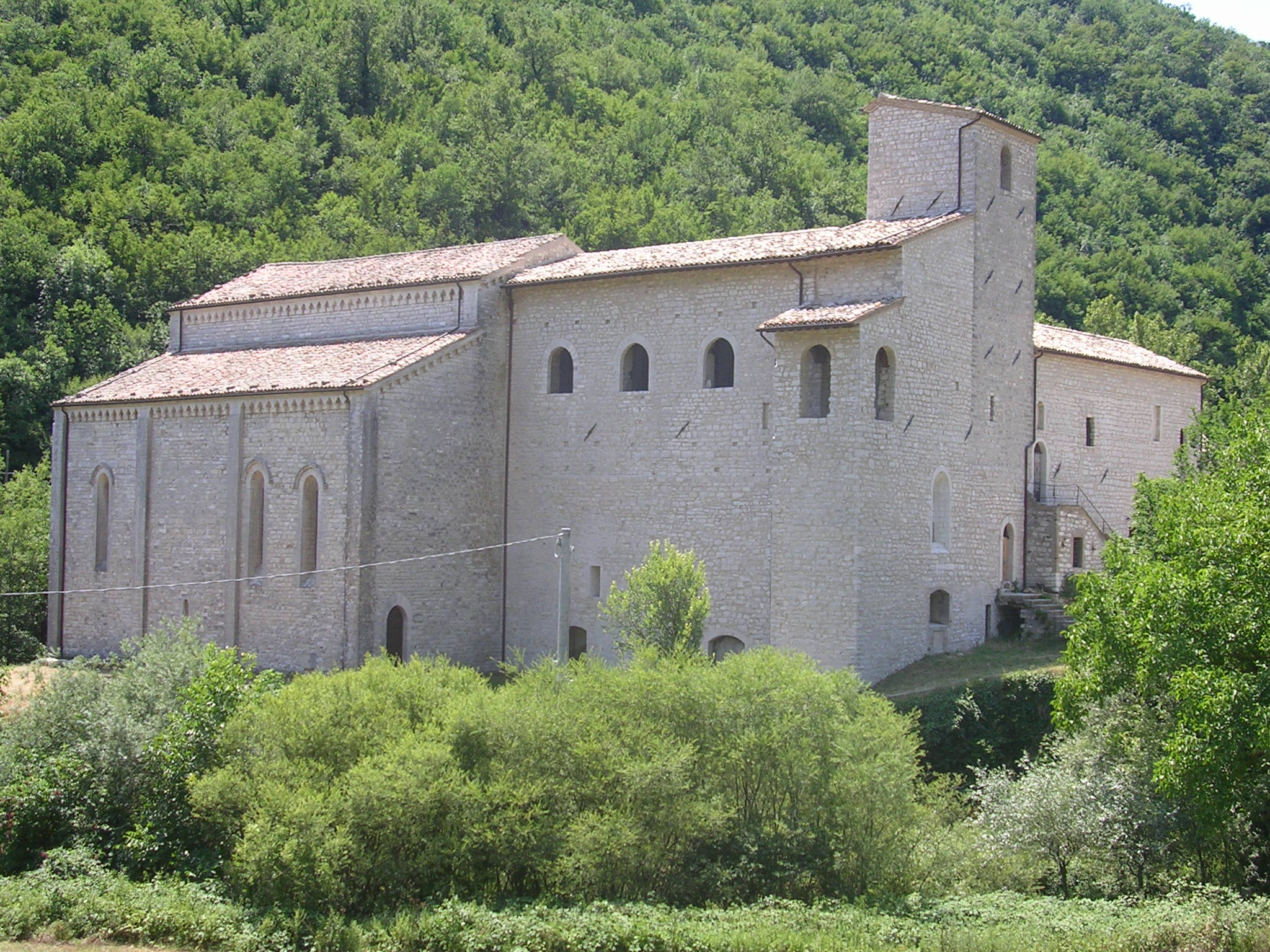
The architecture of this setting is incredibly reassuring that I don’t even want to leave. The high walls that ring around the hortus conclusus gives me a sense of protection and peace.
I continue walking in this piece of paradise, between the flowerbeds and small covered walkways and I have the sensation to be secure internally as well as externally, spiritually satisfied in this otherwise chaotic world.
I cross a small bridge and then leap over a small stream that reminds me of the ancient rivers Pison, Ghista, Tigris and Euphrates.
I now find myself at the entrance to the monastery, but before stepping out of this magical garden like Eden. I turn myself around and enter one last time. There’s a ripened pomegranate tree near a fresh water spring.
I feel the urge once more to hear the warm voice of my beloved husband who dedicated the Canticle of Canticles to me. Again, I cannot resist temptation and I open the bible:“…closed garden that you are, my sister, my wife, closed garden, sealed fountain. Your seedlings are a garden of pomegranates, with the most exquisite fruit… fountain that sprinkles the patch, well of living waters and brooks that feed from Lebanon…”
1 Old Testament, Canticle of Canticles
2 “Erbario della Marucelliana” Manuscript C/168, Biblioteca Marucelliana di Firenze
3 T. Garzoni da Bagnacavallo “La piazza universale di tutte le professioni del mondo” ed.1599