giovedì, Dicembre 11, 2025
  • Shop
  • My Account
    • Cart
    • Checkout
  • Contact Us
  • Login
evus.it
  • Home
    • Home – Layout 1
    • Home – Layout 2
    • Home – Layout 3
    • Home – Layout 4
    • Home – Layout 5
No Result
View All Result
Plugin Install : Cart Icon need WooCommerce plugin to be installed.
evus.it
  • Home
    • Home – Layout 1
    • Home – Layout 2
    • Home – Layout 3
    • Home – Layout 4
    • Home – Layout 5
No Result
View All Result
Plugin Install : Cart Icon need WooCommerce plugin to be installed.
evus.it
No Result
View All Result

The symbolic language of the Main Fountain

by Antonella Bazzoli
16/05/2021
in LIFTING THE VEIL
0 0
0
Home LIFTING THE VEIL

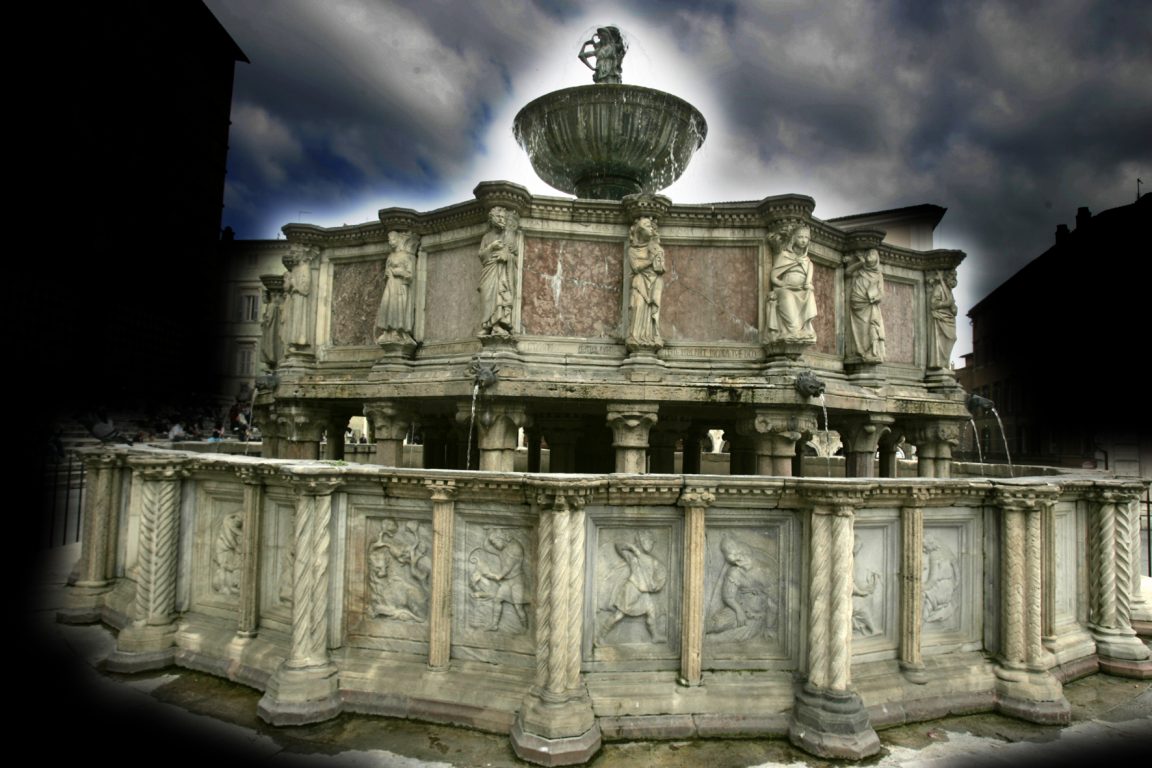
The Fontana Maggiore, also known as Main Fountain, is like a book of stone that unfolds while walking around it.
It’s like a great clock that transcends both cosmic and earthly timetables.
Completed in 1278, the monument became the fulcrum of the Guelph Commune of Perugia, and therefore the symbol of the Platea Magna (latin term for Main Square).
In 1280 the spring water could arrive in the public square, carried along the new aqueduct that was planned by the local authorities and made by the famous idraulic engineer Boninsegna da Venezia.
Used over the centuries to get water solely by etruscan wells and cisterns, the Perugians had finally spring water coming from the northern mountain of Perugia (Monte Pacciano).
The two large polygonal stone basins, placed one above the other, and the bronze cup positioned at the top of the monument, were carved and decorated by Nicola and Giovanni Pisano, two of the most important representatives of the gothic art in Italy.
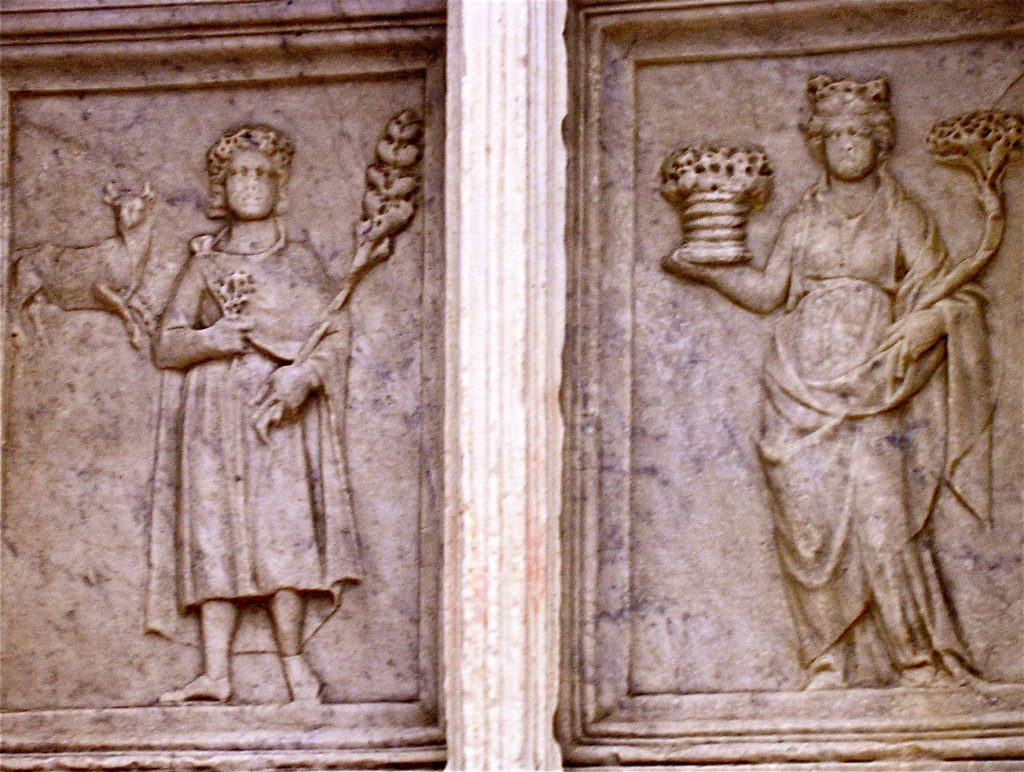
“Look, you who passes by, at this fountain that merrily murmurs. If you look well you will see wonderful things” . This is the first verse of the Latin inscription that runs along the cornice of the highest bronze basin.
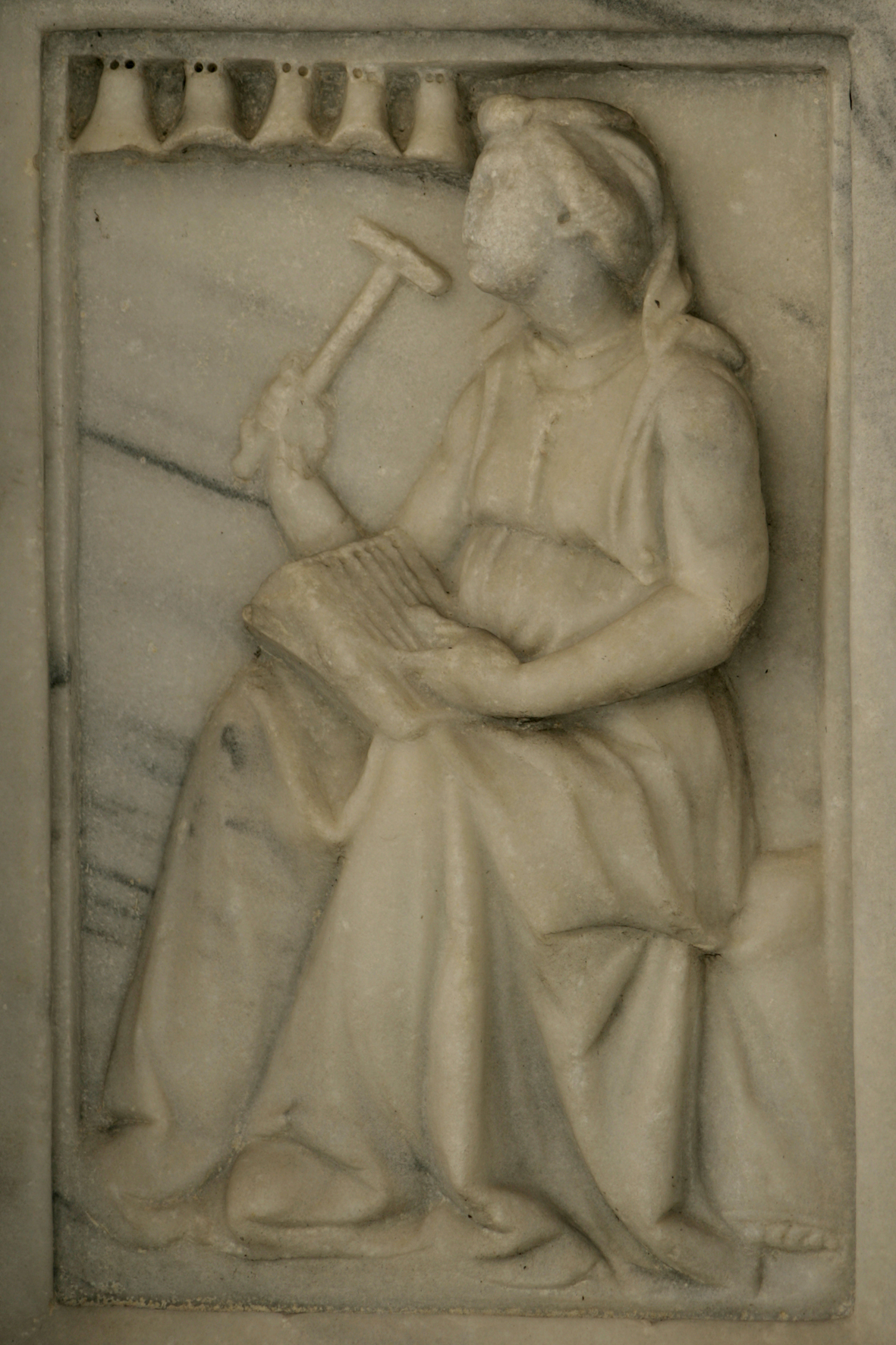
The statues and the relieves of the Main Fountain reflect the power of the mighty Guelph Commune of Perugia in the Middle Ages.
By observing the historical, biblical and mythological characters represented in the panels of the lower basin , it is possible to decode an educated and symbolic language that taps into both the classical culture of ancient Greece and Rome, as well as that of the western Judeo-Christian heritage.
Architect of the medieval monument was Fra Bevignate, a Benedictine educated monk belonging to the Silvestrinian order.
He is honored in the dedicatory inscription that runs along the fountain, together with the two carvers, Giovanni and Nicola Pisano, and with Boninsegna Veneziano, who was responsible for the hydraulic works. In 1280 the new fountain and the new aqueduct made possible to carry water from the spring of Mount Pacciano to the main public square of Perugia.
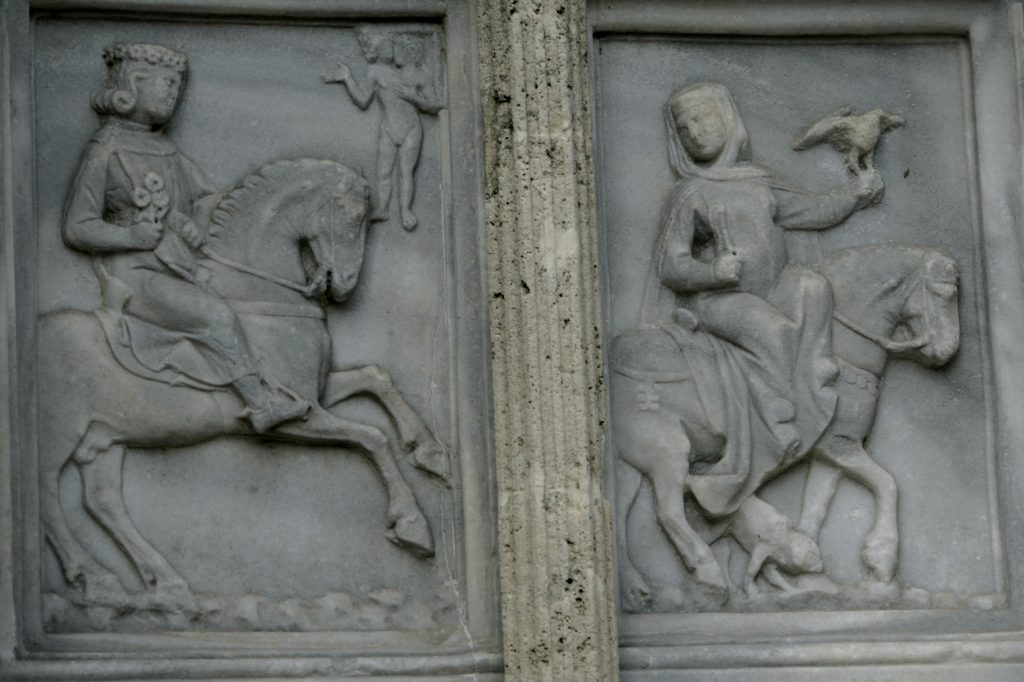

Antonella Bazzoli, June 2009
 

Tags: gothic art, middle ages, Perugia

Tags: Knight TemplarMain FountainPerugia
ShareTweet

Antonella Bazzoli

Next Post

Uxor, the ideal bride in the Main Fountain

  • Trending
  • Comments
  • Latest
Da Gesù a Francesco: “Pace a questa casa”

Da Gesù a Francesco: “Pace a questa casa”

26/11/2025
La Verità e la Menzogna

La Verità e la Menzogna

31/01/2023
L’ottavo giorno, simbolo della resurrezione di Cristo

The mystery of Greek inscriptions in the Temple

21/05/2021

The Tree of Life is within us

16/05/2021
La Corsa dei Ceri e le Tavole Eugubine

La Corsa dei Ceri e le Tavole Eugubine

0
Visita Guidata a Perugia:  L’Arte tra Medioevo e Rinascimento

La fontana delle donne

0
Il mistero del capitello di Spoleto

Il mistero del capitello di Spoleto

0
Sum ergo cogito

Sum ergo cogito

0
Babbo Natale, San Nicola e il solstizio invernale

Babbo Natale, San Nicola e il solstizio invernale

26/11/2025
Da Gesù a Francesco: “Pace a questa casa”

Da Gesù a Francesco: “Pace a questa casa”

26/11/2025

Il fiore della vita, simbolo universale di geometria sacra

05/11/2025
Le seconde nozze di Federico II

Le seconde nozze di Federico II

05/11/2025
evus.it

We bring you the best Premium WordPress Themes that perfect for news, magazine, personal blog, etc.

Read more

Categories

  • Antiquae gentes
  • Apocalypsis
  • Asherah
  • Blow up
  • Convegni
  • Eros e Psyche
  • Grandangolo
  • Homo faber
  • in Italia
  • Itinerari di Evus
  • la Croce e la Spada
  • LIFTING THE VEIL
  • News
  • Racconti di Evus
  • Reportage
  • Ritratto
  • Scoperte di Evus
  • scoperte di evus
  • Simbolica-mente
  • Uncategorized
  • Uomini e Miti
  • Visite Guidate
  • Zoom

Tags

amor cortese arcangelo Michele archeologia cristiana arte gotica Assisi calendari Chiusi culti precristiani culto micaelico dicembre donna nel medioevo Etruschi febbraio Federico II Fontana Maggiore frate Elia Giovanni e Nicola Pisano graffiti Gubbio iconografia Iside Isola d'Elba maggio Main Fountain medioevo Mikael Natale nomina sacra PASQUA Perugia popoli italici San Bevignate San Francesco San Michele arcangelo santi patroni simboli medievali solstizio d'inverno Spello templari tradizioni folkloriche Umbria uxor vangeli apocrifi via Flaminia zoologia fantastica

Recent News

Babbo Natale, San Nicola e il solstizio invernale

Babbo Natale, San Nicola e il solstizio invernale

26/11/2025
Da Gesù a Francesco: “Pace a questa casa”

Da Gesù a Francesco: “Pace a questa casa”

26/11/2025

© 2025 JNews - Premium WordPress news & magazine theme by Jegtheme.

Welcome Back!

Login to your account below

Forgotten Password?

Retrieve your password

Please enter your username or email address to reset your password.

Log In
No Result
View All Result
  • Home
    • Home – Layout 1
    • Home – Layout 2
    • Home – Layout 3
    • Home – Layout 4
    • Home – Layout 5

© 2025 JNews - Premium WordPress news & magazine theme by Jegtheme.